

Introduction: The Timeless Power of Storytelling in Marketing
Humans told stories long before there were businesses, ads, or even writing. Stories let people exchange lessons, beliefs, and feelings across generations, over campfires, and in caves. Today’s marketing is driven by the same ageless instinct.
Audiences are continuously scrolling, skipping, and disregarding in a world full of digital stuff. However, a compelling story that evokes strong emotions stops them in their tracks.
Because of this, one of the best methods for brands to stand out in marketing is through narrative. It transforms a corporation into a relationship, a campaign into an emotion, and a product into a personality.
This blog examines the psychology, strategy, and art of marketing storytelling using real-world examples from both well-known international brands and Indian companies that have perfected the technique.
What Is Storytelling in Marketing?
The practice of utilizing a narrative to convey your brand’s message in a relatable, memorable, and emotive way is known as storytelling in marketing. You concentrate on meaning—the “why” behind what you do—rather than features or costs.
Making others feel who you are is more important than simply telling them who you are.
Here is an illustration:
“Our running shoes are lightweight and comfortable,” without any narrative.
Using Storytelling: “Our shoes are made for people who keep moving forward—built for dreamers who chase sunrises, not deadlines.”
One sells a story, while the other offers a shoe, yet both communicate the same product benefit.
The power of narrative is that change in emotion. It transforms your audience from consumers into believers.
The Psychology Behind Storytelling in Marketing
Why is storytelling so effective? Neuroscience holds the key to the solution.
Only the language regions of people’s brains fire when they hear facts. However, other areas light up when people hear stories; they are the same areas that process memories, emotions, and empathy. This implies that stories are experienced rather than only comprehended.
The human memory is roughly 22 times more likely to recall facts if they are included in a story, according to renowned cognitive psychologist Jerome Bruner.
The following fundamental psychological ideas explain why storytelling is such an effective marketing strategy:
- Emotion Influences Decision Making: 90% of purchasing decisions are impacted by emotion rather than reason, according to studies. Although they make decisions based on their emotions, they use facts to support their purchases. A thorough spec sheet may not be nearly as powerful as a story that inspires happiness, optimism, or nostalgia.
- Empathy Is Produced by Mirror Neurons: Our brains mimic the experience when we hear about someone conquering a difficult situation. This fosters empathy, and empathy fosters trust in marketing.
- Retention of Memory: Compared to facts alone, stories are up to 22 times more remembered. For this reason, a brand story may stick in your memory for years whereas a slogan may be forgotten.
- Belonging and Identity: People adore stories in which they recognize themselves. Key components of brand loyalty, identity and belonging, are strengthened when a brand tells a story that reflects the values of its target audience.
The Evolution of Storytelling in Advertising
The use of storytelling in marketing is not new; it has merely changed as culture and technology have.
- The Print Era: Long-copy advertisements in newspapers and magazines employed storytelling in early advertising (1900s–1950s). For instance, De Beers developed the well-known “A Diamond is Forever” campaign, which associates diamonds with unending love rather than luxury or cost.
- The Age of Television: Brands started utilizing visual storytelling as TV became more popular. Cadbury’s “Kuch Khaas Hai” and Coca-Cola’s Christmas commercials linked ordinary joy with feelings.
- The Revolution in Digital Technology: These days, social media, YouTube, podcasts, and influencer content all feature storytelling. Instead of communicating with consumers, brands now co-create stories with them.
Campaigns like Tanishq’s poignant advertisements, Nike’s uplifting short videos, and Zomato’s clever social storytelling are engaging, intimate, and community-driven.
Key Elements of Great Brand Storytelling
A superb story follows structure and emotion rather than being haphazard. These five storytelling components serve as the cornerstone for any campaign launch or Instagram caption.
- Character– Every Tale Requires a Hero: Your customer is the hero in brand storytelling, not your business. Your brand acts as a guide to assist customers in achieving their objectives. For instance: Nike is the enabler and the athlete is the hero in their narratives. Women are the main characters in Dove’s advertising campaigns, challenging conventional notions of beauty. What are the goals of your audience, and who are they?
- Conflict- What Obstacle Needs to Be Surmounted?: Tension is an issue that generates emotional investment and is necessary for all stories.
Conflict may be: External (a market challenge, a social norm) Internal (fear, insecurity, and self-doubt). For instance, Tanishq’s advertisements frequently address cultural or emotional challenges, such as remarriage or inclusion, and do it in a way that is consistent with contemporary Indian ideals. - Resolution- How Does the Narrative Conclude?: Satisfaction results from the resolve. It demonstrates how your message or product aids the hero (consumer) in overcoming the obstacle. Example:
Coca-Cola’s “Open Happiness” campaign resolves emotional disconnect by positioning Coke as the drink that brings people together. - Emotion- The Heart of Every Story: Without emotion marketing is just noise. Whether it’s nostalgia, joy, empathy, or inspiration — stories that feel real stay remembered. Example: Amul’s topical cartoons evoke humor and wit, while still reflecting real societal moods.
- Genuineness-The Basis of Confidence:
In the era of openness, viewers are able to discern authenticity. Long-term loyalty is gained by brands that communicate authentic, purpose-driven tales. For example, Patagonia’s sustainability-driven narrative feels genuine since it aligns with their principles and behavior. In a similar vein, the Indian company The Better India thrives on social effect and truth-based storytelling.
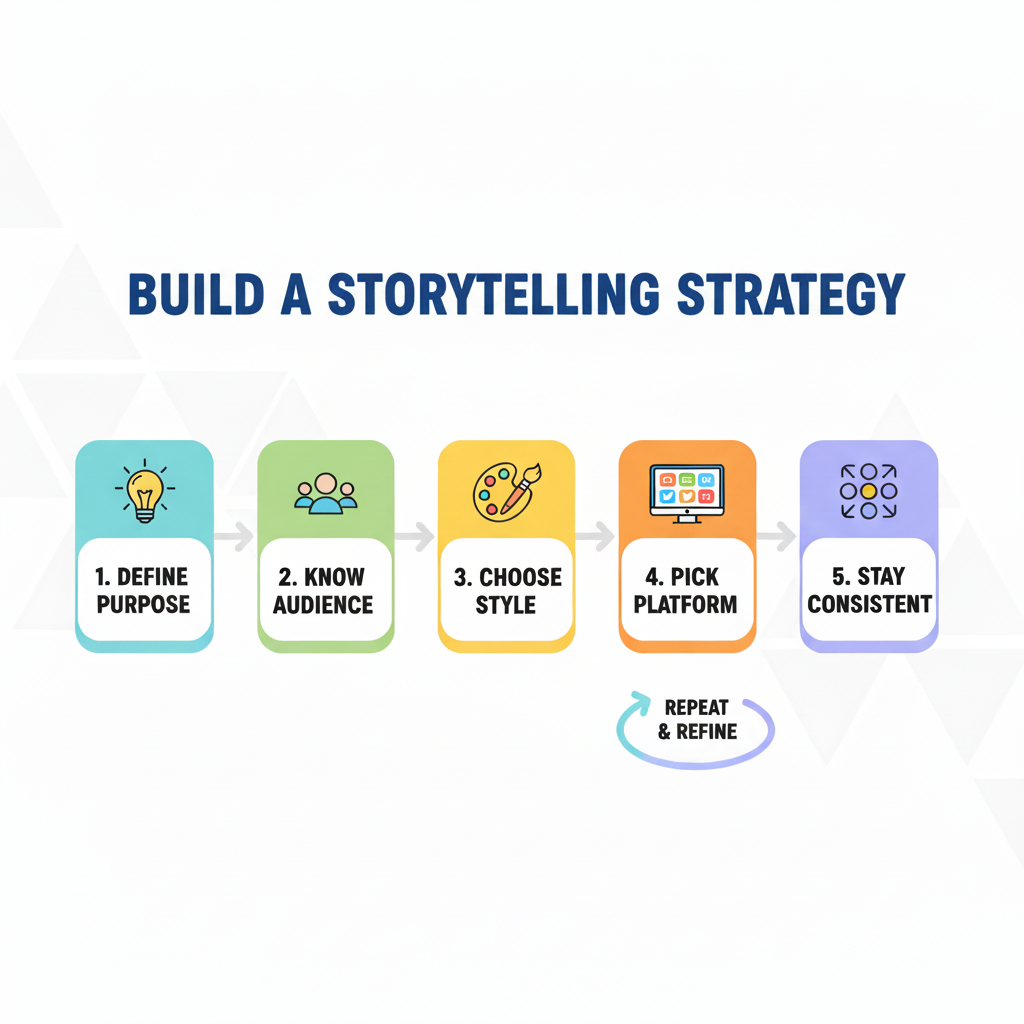
How to Build a Storytelling Strategy for Your Brand
Now let’s put theory into practice. How can you develop a creative and successful storytelling technique?
Step 1: Establish Your Brand’s Goals
Why does your brand exist for reasons other than financial gain? What issue or viewpoint are you attempting to disseminate?
For instance: Apple is an advocate of questioning the status quo. “Jaago Re,” or “awakening social consciousness,” is what Tata Tea stands for. Your story’s “moral” is shaped by your aim.
Step 2: Recognize Your Audience
If you don’t know who you’re telling the tale to, you can’t make it significant. Utilize resources such as customer journey maps and audience personas to ascertain:
- What drives them?
- What irritates them?
- Which types of content are they most interested in?
When Zomato posts playful, relatable tweets, it’s because they understand the Indian millennial mindset deeply.
Step 3: Choose Your Narrative Style
| Narrative Style | Description | Best For |
| Hero’s Journey | A character overcomes challenges with your brand’s help | Inspirational campaigns |
| Origin Story | Shares your brand’s beginnings | Founder-led storytelling |
| Mission Story | Highlights your values or causes | CSR campaigns |
| Customer Story | Showcases real user experiences | Testimonials, UGC |
| Transformation Story | Focuses on change and growth | Before-after campaigns |
Example: Mamaearth uses founder-origin storytelling to connect with young parents through authenticity.
Step 4: Pick the Right Platform
Your storytelling format depends on where your audience spends time:
- Instagram → Visual micro-stories
- YouTube → Video narratives
- LinkedIn → Thought-leadership stories
- Email → Sequential storytelling campaigns
For instance, Fevicol uses humor-driven storytelling on social media while maintaining emotional legacy in its ads.
Step 5: Maintain Consistency
A great story isn’t told once — it’s lived daily.
Ensure your tone, visuals, and messaging remain consistent across every channel. This builds recognition and emotional continuity.
Types of Storytelling in Marketing
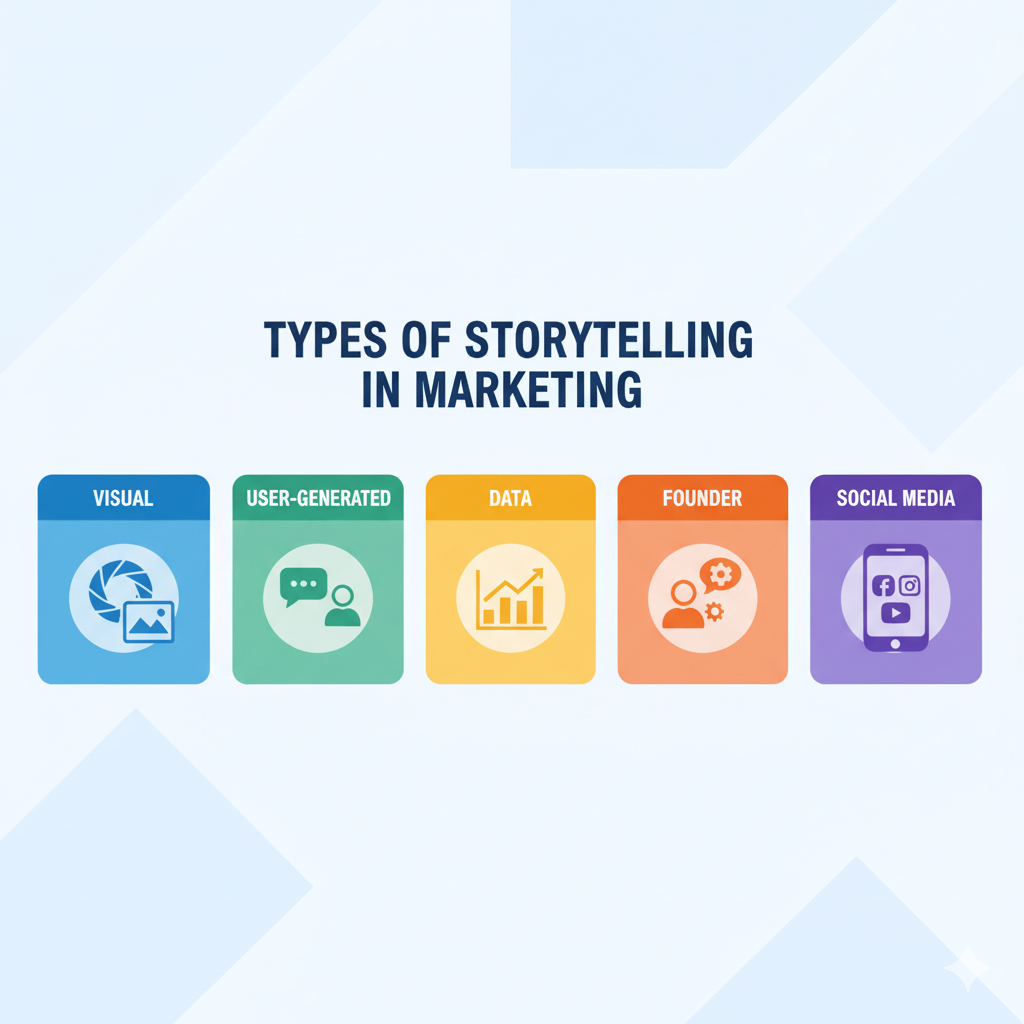
Storytelling in marketing takes many shapes. The medium and message can change, but the heart — emotional connection — stays the same. Let’s look at the most effective types of storytelling that brands use today.
1. Visual Storytelling
Images and videos are great narrative tools because humans perceive visuals 60,000 times faster than words.
Paragraphs of text cannot convey the same information as a brief movie, infographic, or carousel.
For instance: Zomato employs clever, visually appealing postings that combine relatability and humor.
2. User-Generated Storytelling
Your clients themselves tell the most genuine tales.
Storytelling created by users fosters community, credibility, and trust.
For instance: Real adventures from real people, or user-generated movies, are the foundation of GoPro’s entire marketing empire.
3. Data-Driven Storytelling
It’s not necessary for numbers to be dull. They can convey convincing, believable stories when combined with emotion.
For instance: Each user’s listening data is turned into a unique tale by Spotify Wrapped.
4. Founder or Origin Storytelling
People are curious about the origins of everything, including the struggle, the dream, and the inspiration. Founder storytelling creates emotional intimacy and gives your brand a face.
For instance: Apple highlights Steve Jobs and Steve Wozniak’s modest garage origins.
5. Social Media Storytelling
Micro-storytelling is popular in today’s attention economy on sites like YouTube Shorts, Instagram, and X (Twitter).
Brands incorporate stories into:
- Posts with a carousel (sequential narrative)
- Series of captions (little blogs)
- Highlights of the story (brand diaries)
Common Mistakes to Avoid in Brand Storytelling
- Focusing too much on the product
- Inconsistency across platforms
- Inauthentic messaging
- Lack of structure
- Ignoring feedback
