

A product or service by itself rarely makes a difference in today’s cutthroat market. Branding is what really sets one company apart from another. In addition to drawing in clients, effective branding fosters emotional ties, loyalty, and trust. It transforms a simple business into a memorable name and converts a one-time customer into a lifelong supporter.
What Is Branding?
The process of giving a company a distinctive identity in the eyes of customers is known as branding. The company’s name, logo, design, tone of voice, and—above all—the general impression that people have of it are all included.
But branding encompasses more than just a company’s appearance; it also includes its values. A company’s values, mission, and promises to its clients are communicated by its brand.
For instance, innovation, simplicity, and superior quality are central to Apple’s branding. Nike is a symbol of human potential and motivation. Over time, consistent experiences that complement their brand identity help to create these associations.
Why Branding Matters
1. Creates Recognition
A powerful brand helps people recognize your company right away. Customers can more easily recognize your brand among many others when colors, fonts, and tones are used consistently.
2. Builds Trust and Credibility
Consumers like to purchase from companies they can trust. Customers are more confident in their choice of your product or service when your branding is consistent across all touchpoints, including your website, packaging, social media accounts, and advertisements.
3. Drives Emotional Connection
All marketing initiatives are guided by branding. A distinct brand identity makes it easier to make sure that the personality and message of the company are reflected in each campaign, advertisement, and communication. By strengthening recognition, it also makes marketing investments more effective.
4. Supports Marketing and Sales
All marketing initiatives are guided by branding. A distinct brand identity makes it easier to make sure that the personality and message of the company are reflected in each campaign, advertisement, and communication. By strengthening recognition, it also makes marketing investments more effective.
5. Inspires Employees
A powerful brand influences internal culture as well as external culture. Workers are more inspired and honored to represent their company when they comprehend and identify with its brand. Productivity and morale are raised as a result.
Elements of Strong Branding
Building a brand is not just about visuals; it’s about creating a complete and consistent experience. Here are the essential elements that make up a strong brand:
1. Brand Purpose and Values
The foundation of any brand should be its purpose. Values specify what your brand stands for, while purpose explains why it exists in addition to making money. Consumers are more likely to support brands that align with their values, such as innovation, sustainability, or inclusivity.
2. Brand Name and Logo
The visual pillars of your identity are your brand name and logo. They need to be straightforward, memorable, and representative of the essence of your company. Consider simple yet recognizable logos like McDonald’s golden arches or Nike’s swoosh.
3. Brand Voice and Messaging
Your brand “speaks” through your voice. It encompasses your communication style, language, and tone. Whether you’re authoritative, witty, formal, or friendly, maintaining consistency across platforms makes it easier for customers to identify your brand personality.
4. Brand Experience
Your brand image is influenced by every consumer interaction, from customer service to website navigation. People’s perceptions of your brand are influenced by even the smallest details, such as packaging design or post-purchase assistance.
5. Consistency
The secret is consistency. A stronger and more reliable identity is created by a brand that maintains consistency in appearance and feel across all touchpoints, including social media, emails, ads, and physical stores.
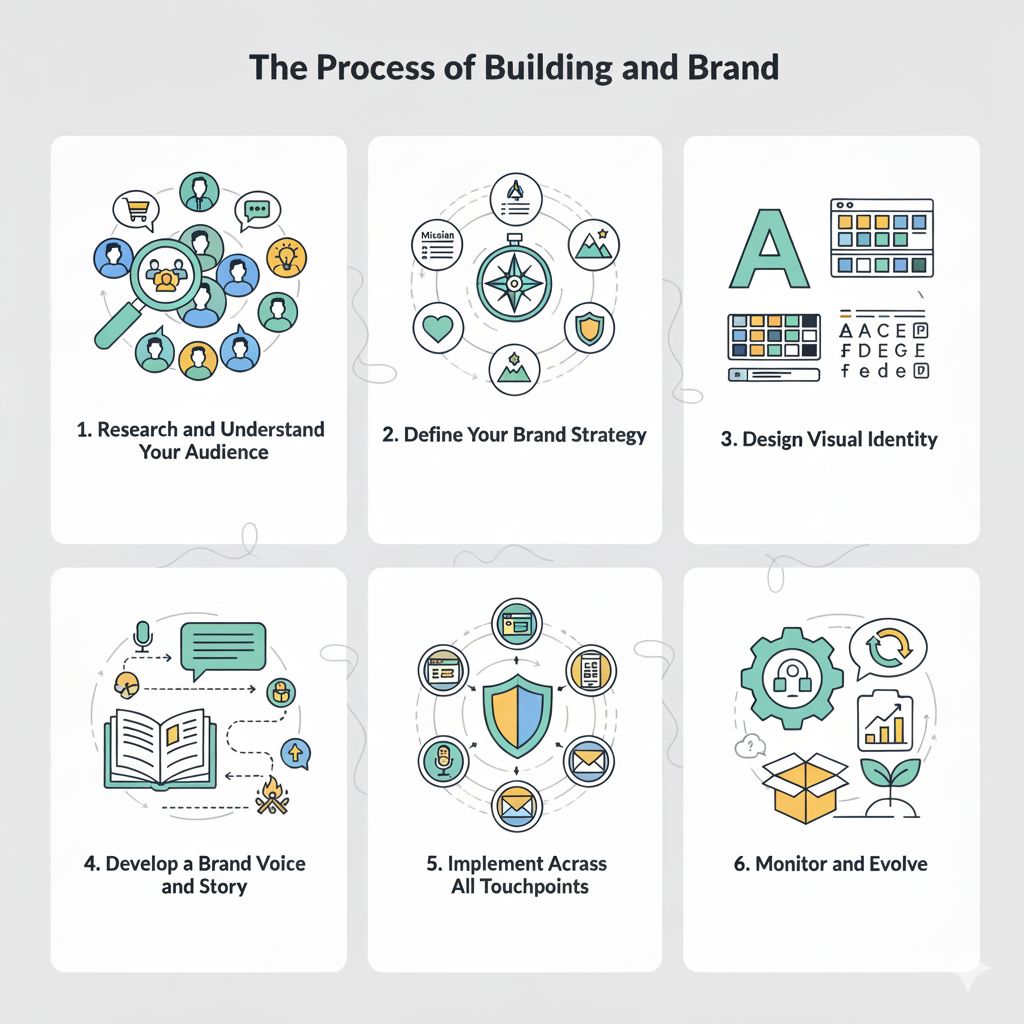
The Process of Building a Brand
Creating a brand requires thoughtful planning and long-term commitment. Here’s how businesses typically build one:
1. Research and Understand Your Audience
Knowing to whom you are speaking is the first step. Determine your target audience’s inclinations, obstacles, and driving forces. You can create a brand that appeals to them by knowing what matters to them.
2. Define Your Brand Strategy
This encompasses your positioning, values, vision, mission, and personality. Choose how you want people to see you and what sets your company apart from the competition.
3. Design Visual Identity
Develop a logo, color scheme, font, and other design components that capture the essence of your company. Your brand becomes more recognizable and memorable when it is visually consistent.
4. Develop a Brand Voice and Story
Stories are easier for people to recall than facts. Create a story that communicates the vision, mission, and journey of your brand. A gripping narrative increases relatability and emotional involvement.
5. Implement Across All Touchpoints
Use your brand consistently across all platforms, including your website, social media accounts, packaging, emails, and ads. Make sure your experience, tone, and images are all consistent.
6. Monitor and Evolve
Branding is dynamic. Your brand needs to adapt while keeping its essential characteristics as markets and customer preferences shift. Your brand remains competitive and relevant through constant improvement.
Examples of Powerful Branding
Apple: Focuses on innovation, simplicity, and user experience. Every product, store, and ad reflects these principles.
Nike: Uses motivational branding that connects emotionally through the idea of empowerment- “Just Do It.”
Starbucks: Built an experience-based brand around comfort, community, and consistency across locations.
Tata: Represents trust and reliability—values that resonate deeply with Indian consumers.
The Future of Branding
Branding is becoming more about authenticity rather than just identity as consumer behavior changes. Customers of today are concerned with purpose, sustainability, and transparency. They back companies that stand up to injustices and promote change in addition to selling goods.
Additionally, brand storytelling is now more interactive thanks to digital platforms. Social media, influencer marketing, and personalized content allow brands to engage with audiences in real-time, making relationships more human and authentic.
